Pink Mouse: A Modern Script Handwritten Font for Elegant Branding
I remember staring at a blank Figma canvas, trying to build a visual identity for a boutique skincare line called "Lumina." The brief asked for something classic, elegant, and undeniably feminine, but I was tired of the overused, overly curly script fonts that cluttered every Etsy shop and wedding invitation. I needed a Script Handwritten typeface that felt modern rather than vintage, with enough structure to hold a brand together without sacrificing personality. That was when I pulled up Pink Mouse. It wasn’t just another decorative font; it was a solution. As an experienced brand designer, I’ve spent the last few weeks stress-testing this Fonts family across logos, packaging mockups, and social media layouts. Here is my honest review of how Pink Mouse performs in real-world commercial design.
Pink Mouse as a Headline Typeface for Boutique Brand Identity
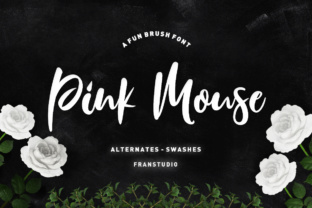
When you first open the file, the immediate characteristic of Pink Mouse is its smooth lines and varying baseline. Unlike rigid calligraphy scripts that demand perfect alignment, Pink Mouse mimics the natural rhythm of hand-lettering while maintaining a polished finish. In my project for Lumina, I used Pink Mouse as the primary headline font for the logo concept. The varying baseline gives it a playful yet sophisticated bounce, which immediately softened the brand’s perceived stiffness. For any creative studio or freelancer looking to inject a classic and elegant touch into their work, this script font serves as a powerful display font. It commands attention without shouting. When placed on a dark matte background for the brand board, the contrast between the clean sans-serif body text and the flowing Pink Mouse headlines created a hierarchy that felt intentional and high-end. It proves that a modern calligraphy font can anchor a brand identity effectively.
Pink Mouse Performance on Packaging Design and Product Labels
One of the biggest challenges in packaging design is legibility versus aesthetics. I took the Pink Mouse license and applied it to a series of product labels for a handmade soap line. Because Pink Mouse is designed with smooth lines, it scales beautifully even on smaller surfaces like jar lids and shipping tags. However, I learned quickly that this Script Handwritten font is best utilized as an accent or short phrase font rather than for long descriptions. On the front label, where I wrote "Handcrafted" and "Organic," the font shone. Its elegant curves caught the light and drew the eye, elevating the perceived value of the product. For entrepreneurs and small business owners selling physical goods, using Pink Mouse on your primary packaging can signal quality and care. Just be mindful of the size; if you need to list ingredients or usage instructions, pair it with a highly readable sans serif font. The combination allows the script to provide the emotional hook while the supporting typography handles the practical information.
Pink Mouse for Social Media Graphics and Digital Content Creation
In the realm of digital marketing, visual consistency is key. I tested Pink Mouse across various social media templates for Instagram and Pinterest. The font’s modern aesthetic translates exceptionally well to screen-based designs. Whether I was creating a quote graphic for a wellness blog or a promotional banner for a limited-time offer, Pink Mouse added a layer of sophistication that standard bold scripts often lack. Its varying baseline prevents the text from feeling static, making static images feel more dynamic. For content creators and bloggers who want to stand out in a crowded feed, incorporating Pink Mouse into your design assets can help establish a recognizable visual voice. It works particularly well for headers in email newsletters or website hero sections where you want to convey warmth and approachability. The fact that it is a premium font means the kerning and spacing are already optimized, saving you hours of manual adjustment in Photoshop or Canva.
Pink Mouse Pairing Strategies with Serif and Sans Serif Fonts
No single typeface tells the whole story. To make Pink Mouse truly effective in a comprehensive branding project, smart font pairing is essential. In my review process, I found that Pink Mouse pairs most harmoniously with clean, geometric sans serifs for body copy. The contrast between the organic, flowing nature of the script and the structured geometry of a sans serif creates a balanced modern typography system. For example, using a minimalist sans serif for navigation menus and paragraphs allowed Pink Mouse to take center stage in the headlines without competing for attention. I also experimented with pairing it with a classic serif font for editorial design pieces, such as magazine-style blog posts. The result was a timeless, literary feel that suited the "classic and elegant" description perfectly. Avoid pairing it with other heavy script fonts, as the varying baselines can create visual clutter. Instead, let Pink Mouse be the star of the show by letting neutral fonts support it.
Practical Considerations for Commercial Use and Licensing
Before integrating Pink Mouse into your final client deliverables, there are practical steps every designer should take. First, always check the specific commercial font licensing terms. While Pink Mouse is excellent for personal projects, using it in client work, merchandise, or print-on-demand products requires the appropriate license to avoid legal issues. Secondly, test the font thoroughly across different mediums. I noticed that while Pink Mouse looks stunning on high-resolution screens, its fine details might get lost if printed on low-quality paper or embroidered on cheap fabrics. Always do a proof print before mass production. Additionally, explore the included styles, alternates, and ligatures if available in your download. These subtle variations can add unique character to your logo design or custom illustrations. Finally, consider webfont availability if you plan to use Pink Mouse on websites. If it is not available as a webfont, you may need to convert it to vector paths for SVG use, which ensures consistent rendering across browsers. By following these guidelines, you ensure that your investment in this elegant script pays off in both aesthetic appeal and professional integrity.